A Theory of Change for clinical trials: framework for improving patient engagement, adherence, retention and trial efficiency
Clinical trials face persistent challenges across engagement, adherence and retention — increasing costs, delaying timelines and putting data quality at risk.
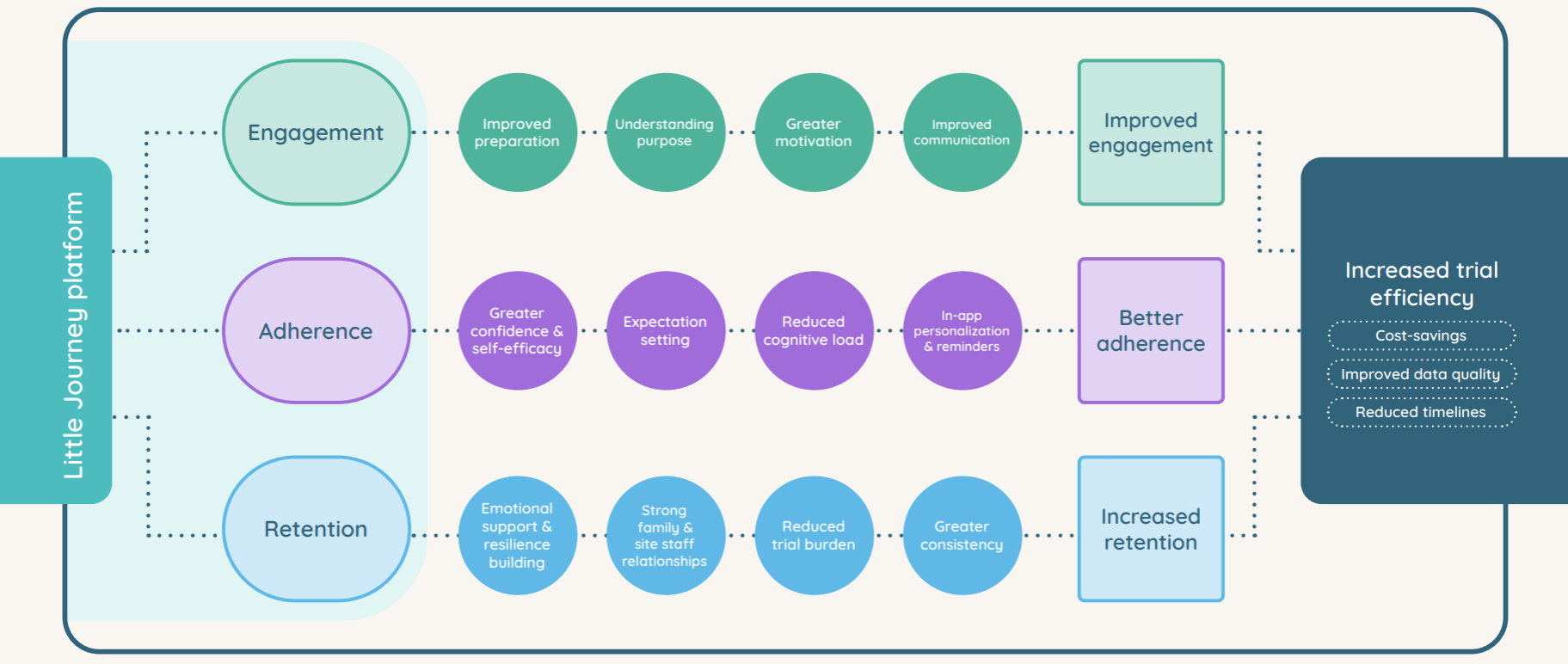
This white paper introduces Trial Flow’s Theory of Change framework, showing how protocol-aligned patient support can reduce burden, improve understanding, strengthen motivation and support better trial outcomes
Key insights...
1. Why engagement, adherence and retention matter
Understand how these three challenges affect trial timelines, data completeness, costs and overall study performance.
2. How patient support creates impact
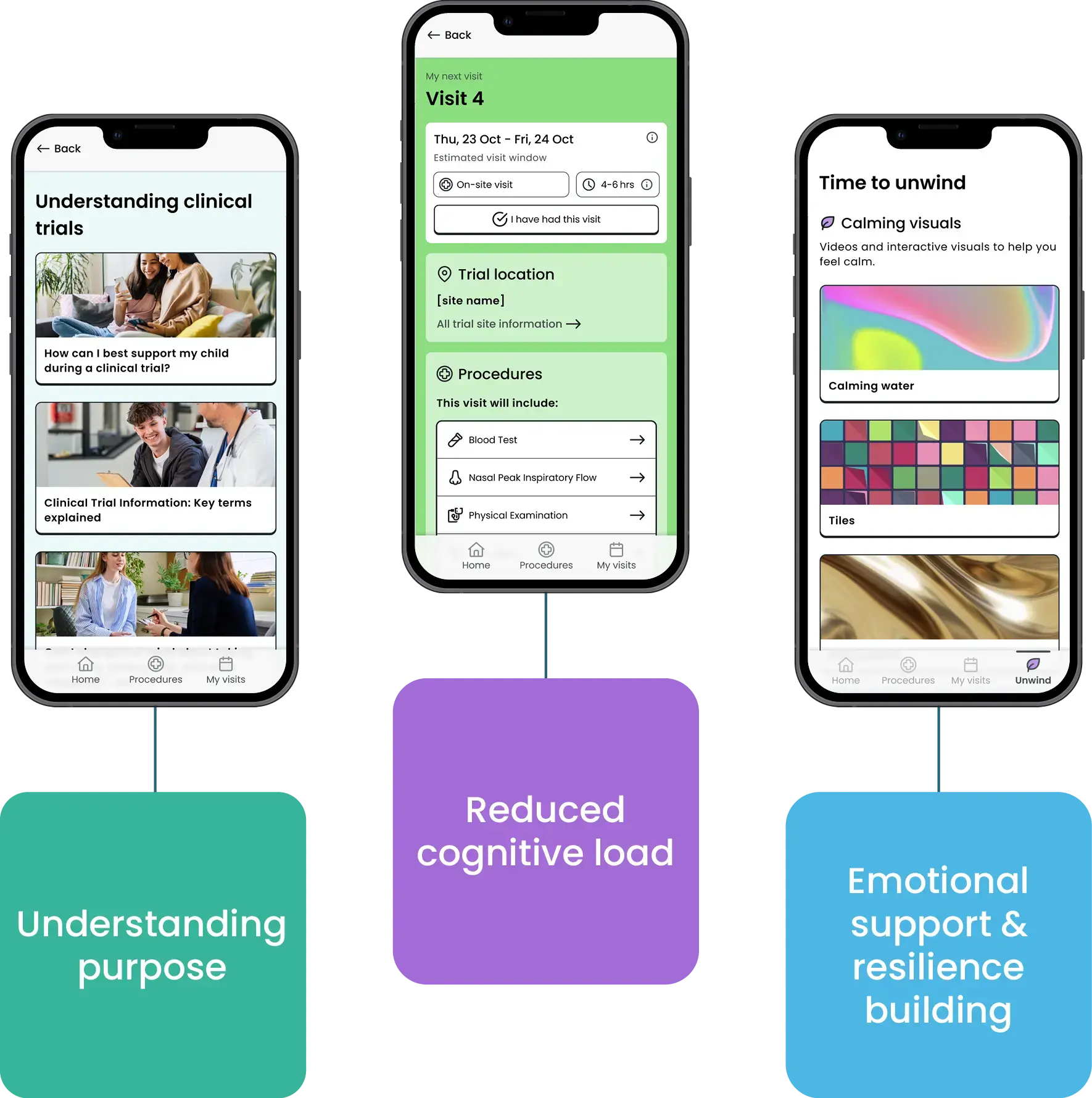
See how Trial Flow maps digital support features to behavioural and experiential pathways including preparedness, confidence, motivation, emotional support and reduced burden.
3. How support can be tailored without losing consistency
Explore how Trial Flow can be configured to each protocol, patient population and operational context while maintaining a standardised approach to measuring impact.
4. How evidence and evaluation support scalable delivery
Learn how a Theory of Change creates a framework for testing assumptions, measuring outcomes and improving patient support across studies and portfolios.
Why this matters
Patient support needs to be intentional, measurable, and scalable
A Theory of Change helps teams:
-
Connect patient support features to behavioural pathways
-
Identify assumptions that need to hold true for impact
-
Align support with measurable trial success indicators
-
Compare outcomes across studies, populations and therapy areas
-
Scale successful approaches without rebuilding from scratch
.png?width=1200&height=1200&name=Alex%20Christensen%20Headshot%20(1).png "Alex Christensen Headshot (1)")
About the author
Dr Alex Christensen
Alex is an experienced researcher and evaluator, with a PhD in public health and 10 years of experience across academia, the NHS, and industry. Her cross-sector background allows her to speak to both the “why” and the “how” of patient-centred impact. In her role as Evidence Manager, Alex focuses on making evidence meaningful, inclusive and commercially relevant for patient-centred clinical research.
Want to see how Trial Flow can apply this framework to your clinical trials?
Talk to us about how Trial Flow can deliver protocol-aligned patient support quickly, globally, and with confidence.


.png?width=1500&height=1500&name=Trial%20Flow%20Phone%20(Left).png "Trial Flow Phone (Left)")